
Something incredible is happening in Ontario right now.
Across the province, psychologists, psychological associates, and graduate students have come together to form the Psychology Advocacy Network (PAN) — an independent, grassroots group deeply concerned about what’s unfolding within our regulatory body and the potential impact on mental health care for every person in Ontario.
This group isn’t backed by a single organization or institution. It’s made up of clinicians and students who love what they do, who have trained for years to do it well, and who are united by one simple goal: to protect the integrity of mental health care in Ontario.
What’s Going On?
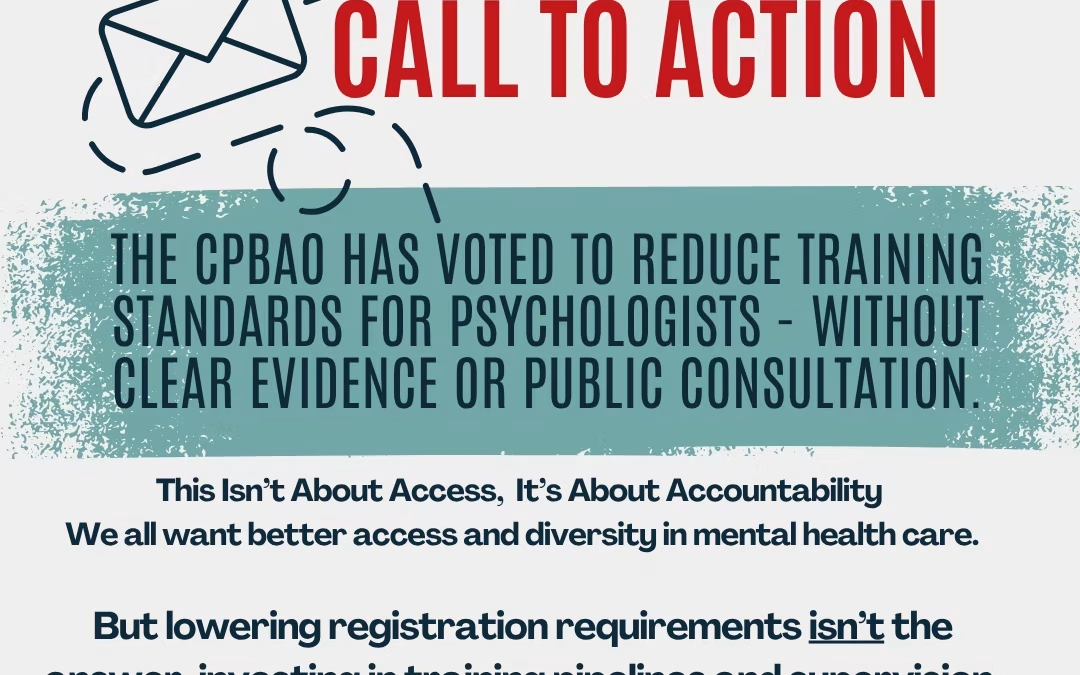
As I’ve written about quite a bit over the past few months, the College of Psychologists and Behaviour Analysts of Ontario (CPBAO) has recently proposed sweeping changes to the education and training requirements to become a psychologist in this province. These changes — described as “modernization” (ha!) — would reduce psychology training standards by approximately 75%.
In practical terms, this could mean:
- Wayyy fewer supervised clinical hours before independent practice
- Elimination of the oral exam (as in, the guardrails to ensure clinicians know how to practice ethically and safely)
- A single, minimal practicum rather than the extensive placements psychologists currently complete (a reduction of 75-90% of training, which is wild)
- Removal of the 4-year supervised work requirement for master’s-level candidates (dropping Ontario down to the lowest standard in the country)
Historically, Ontario psychologists have completed about six years of supervised training before being licensed to work independently. Under the proposed model, someone could be licensed in as little as two years.
That might sound like an administrative efficiency, but in reality, it represents a fundamental shift in how psychologists are trained to work with people who are struggling with trauma, neurodevelopmental disorders, complex mental illness, or life-altering diagnoses.
Why It Matters
Every day, psychologists in Ontario provide services that go far beyond talk therapy.
They conduct assessments that determine whether a child has a learning disability and needs school support.
They diagnose conditions like ADHD, autism, depression, anxiety, and PTSD.
They help people navigate the psychological impact of chronic illness, fertility challenges, disability, or trauma.
When that kind of work is done poorly, the consequences ripple outward, affecting education plans, medication decisions, access to funding, workplace accommodations, and quality of life.
Lowering training standards will not improve access to care. It simply risks lowering the quality of care while leaving the real issues — funding, accessibility, and systemic barriers — untouched.
As many have said, this isn’t about more psychologists.
It’s about maintaining the expertise that people count on when they finally reach out for help.
Why the Psychology Advocacy Network Gives Me Hope
In the face of these changes, psychologists, psych associates, and students from across Ontario have stepped up to build the Psychology Advocacy Network (PAN) from the ground up.
They’ve created an incredible website that clearly outlines the issues, provides transparent information, and — most importantly — gives every Ontarian a voice in this conversation.
If you are a member of the media, they also have developed a centralized hub to direct all media inquiries (click here).
You can visit it here:
The website includes background information, references, and a direct link where anyone — not just psychologists — can send a message opposing the proposed changes.
Because this isn’t just a professional issue.
It’s a public one.
What You Can Do
If you care about mental health care in Ontario — as a client, parent, teacher, health professional, or simply as a person who values quality and safety — please take a few minutes to:
- Visit protectpsychology.ca
- Read about what’s happening and why it matters.
- Click the link to “Vote No” to these changes.
It only takes a minute, but it sends a powerful message: that Ontarians care about high-quality, evidence-based, and ethical mental health care.
A Personal Note
As a psychologist, I’ve never been prouder to be part of this profession, or to stand alongside such a passionate, intelligent, and diverse group of colleagues who care deeply about doing what’s right for the people we serve.
The Psychology Advocacy Network is proof that when we come together — clinicians, students, and members of the public — we can speak with one clear voice: Mental health care in Ontario matters. Let’s protect it.
Take Action → protectpsychology.ca